
 By
By 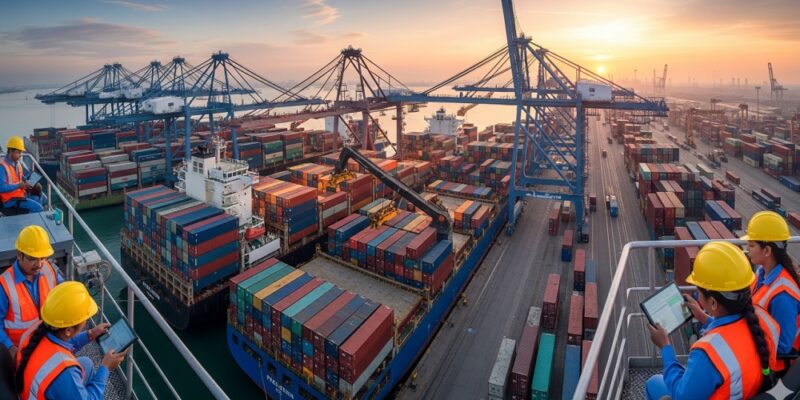
The global marketplace has transformed into a highly interconnected web where the economic health of a nation is often dictated by its ability to produce and sell goods beyond its own borders. Export-oriented industries represent a strategic pivot from domestic self-sufficiency to global competitiveness. These sectors are specifically designed to produce goods and services for consumption in foreign markets, acting as a vital engine for sustainable growth, wealth creation, and long-term financial stability.
By focusing on exports, a country can transcend the limitations of its internal consumer base. This outward-looking approach encourages innovation, improves manufacturing standards, and integrates the local workforce into the international value chain. For developing and developed nations alike, the promotion of export-oriented industrialization is not merely a trade preference but a fundamental necessity for maintaining a positive balance of payments and a resilient national currency.
The Inflow of Foreign Exchange and Currency Stability
One of the most immediate and profound impacts of export-oriented industries is the generation of foreign exchange reserves. When a domestic company sells products to an international buyer, the transaction typically involves a global reserve currency. This influx of hard currency is critical for several reasons.
First, a healthy reserve of foreign currency allows a nation to pay for essential imports, such as raw materials, specialized technology, and energy resources, without depleting its own wealth. Second, it provides the central bank with the tools necessary to stabilize the national currency. When a country exports significantly more than it imports, the demand for its local currency increases, which can prevent rampant inflation and maintain purchasing power for its citizens. This stability creates a predictable environment that is conducive to further investment and long-term economic planning.
Job Creation and Human Capital Development
Export-oriented industries are typically labor-intensive or skill-intensive, depending on the sector. Whether it is a garment factory in Southeast Asia or a high-tech semiconductor plant in the United States, these industries provide millions of jobs that might not exist if the focus were purely domestic.
Beyond the sheer number of jobs, the quality of employment in export sectors tends to be higher. Because these companies must compete on a global stage, they are forced to adopt international best practices in management, safety, and production. To stay competitive, these firms invest heavily in human capital. Employees in export-oriented sectors often receive specialized training, exposure to advanced machinery, and a better understanding of global quality standards. This “knowledge spillover” creates a more sophisticated and capable workforce, which eventually benefits other sectors of the economy as skilled workers move between industries.
Driving Innovation Through Global Competition
Domestic markets can sometimes become stagnant due to a lack of competition or the presence of monopolies. However, export-oriented industries operate in a “sink or swim” environment. To win market share in Europe, North America, or Asia, a company must offer a product that is either better, cheaper, or more innovative than what is currently available.
This constant pressure to perform acts as a catalyst for research and development. Firms are encouraged to find more efficient production methods, utilize better materials, and adopt cutting-edge technologies like automation and artificial intelligence. This drive for efficiency does not stay confined to the export sector. As local suppliers and service providers adapt to meet the high standards of the exporters, the entire industrial ecosystem undergoes a technological upgrade. Innovation becomes a cultural norm, leading to a more dynamic and modernized national economy.
Achieving Economies of Scale
A significant limitation of many national economies is the small size of the local population. If a manufacturer only sells to their own countrymen, they may never reach a production volume that allows them to minimize costs. Export-oriented industries solve this problem by providing access to billions of potential customers worldwide.
By scaling up production to meet global demand, firms can achieve “economies of scale.” This means that as the volume of production increases, the cost of producing each individual unit decreases. These savings can then be reinvested into the business to further improve quality or lower prices. For the national economy, this results in more profitable businesses that contribute higher tax revenues to the government. These revenues, in turn, can be used to fund public infrastructure, education, and healthcare, creating a virtuous cycle of development.
Infrastructure Development and Regional Growth
Export-oriented growth necessitates a robust logistics and transportation network. To move goods efficiently from factories to international ports, a nation must invest in high-quality roads, railways, deep-water ports, and airports.
Governments often prioritize infrastructure projects in regions that house export-processing zones or industrial parks. This focused investment can transform previously underdeveloped rural areas into thriving industrial hubs. The development of a port, for example, does not just benefit the exporters; it creates a local economy centered around warehousing, shipping, maintenance, and hospitality. This decentralization of economic activity helps to reduce the burden on major metropolitan areas and promotes a more balanced distribution of wealth across the country.
Enhancing National Branding and Soft Power
A nation’s exports serve as its primary ambassadors to the world. When a country consistently produces high-quality electronics, automobiles, or luxury goods, it builds a “national brand” that commands respect. This reputation for quality can lead to increased foreign direct investment (FDI), as international investors are drawn to countries with proven industrial capabilities.
Furthermore, strong export ties create a level of economic interdependence that can serve as a tool for diplomacy. Countries that are major trading partners are less likely to engage in conflict and more likely to cooperate on international policy. In this sense, export-oriented industries contribute to national security by making the country an indispensable part of the global supply chain.
Diversification of Economic Risks
Relying solely on domestic consumption makes an economy vulnerable to local downturns, such as a housing market crash or a localized natural disaster. Export-oriented industries provide a cushion by diversifying the sources of revenue.
If a domestic recession occurs, a country with strong export ties can still generate income from foreign markets that are performing well. This geographic diversification ensures that the national economy is not “putting all its eggs in one basket.” By tapping into different regions with different economic cycles, a nation can maintain a level of growth even when internal conditions are challenging.
Frequently Asked Questions
What is the difference between an export-oriented industry and an import-substitution industry?
Export-oriented industries focus on producing goods for the global market to earn foreign exchange and drive growth. Import-substitution industries focus on producing goods locally that were previously imported, usually by using high tariffs to protect domestic manufacturers. While import substitution can help a nation become self-sufficient, it often leads to a lack of competition and higher prices for consumers, whereas export-oriented strategies encourage global efficiency and quality standards.
Can a service-based economy be export-oriented?
Absolutely. In the modern era, “service exports” are a massive component of national economies. This includes software development, financial services, legal consulting, tourism, and education. When a company in one country provides a service to a client in another, it is considered an export and brings in foreign exchange just like a physical product would.
How do small and medium enterprises (SMEs) participate in export-oriented growth?
While large corporations often dominate exports, SMEs are crucial to the supply chain. They often act as sub-contractors, providing specialized parts or raw materials to larger firms. Additionally, digital platforms and e-commerce have made it easier for small businesses to sell niche products directly to international consumers, allowing them to participate in the export market with lower overhead costs.
What are Export Processing Zones (EPZs) and how do they help?
Export Processing Zones are specific areas within a country where the government provides incentives to attract export-oriented businesses. These incentives often include tax holidays, duty-free imports of raw materials, and streamlined bureaucracy. EPZs help by creating a concentrated area of industrial activity that attracts foreign investment and creates concentrated pockets of high-quality infrastructure.
How does a country prevent being too dependent on a single export product?
Economic diversification is key. Governments can promote a variety of sectors—such as agriculture, technology, and manufacturing—to ensure that a price drop in one commodity (like oil or coffee) does not collapse the entire economy. Constant investment in education and research allows a nation to move up the value chain, shifting from exporting raw materials to exporting finished, high-value goods.
Does an export-oriented strategy hurt local consumers by sending the best products abroad?
Generally, the opposite is true. The high standards required for export products often force domestic companies to improve the quality of all their goods. Furthermore, the wealth generated by exports increases the overall purchasing power of the population, allowing local consumers to afford a wider variety of both domestic and imported products.
What role does government policy play in supporting export-oriented industries?
Government policy is vital for creating a favorable trade environment. This includes negotiating free trade agreements, providing low-interest loans for exporters, investing in logistics infrastructure, and simplifying the regulatory hurdles for cross-border trade. Successful export-led growth is almost always a result of close cooperation between the private sector and proactive government planning.




Comments